Berghaus, the Great Outdoors, and the funny thing about Instagram
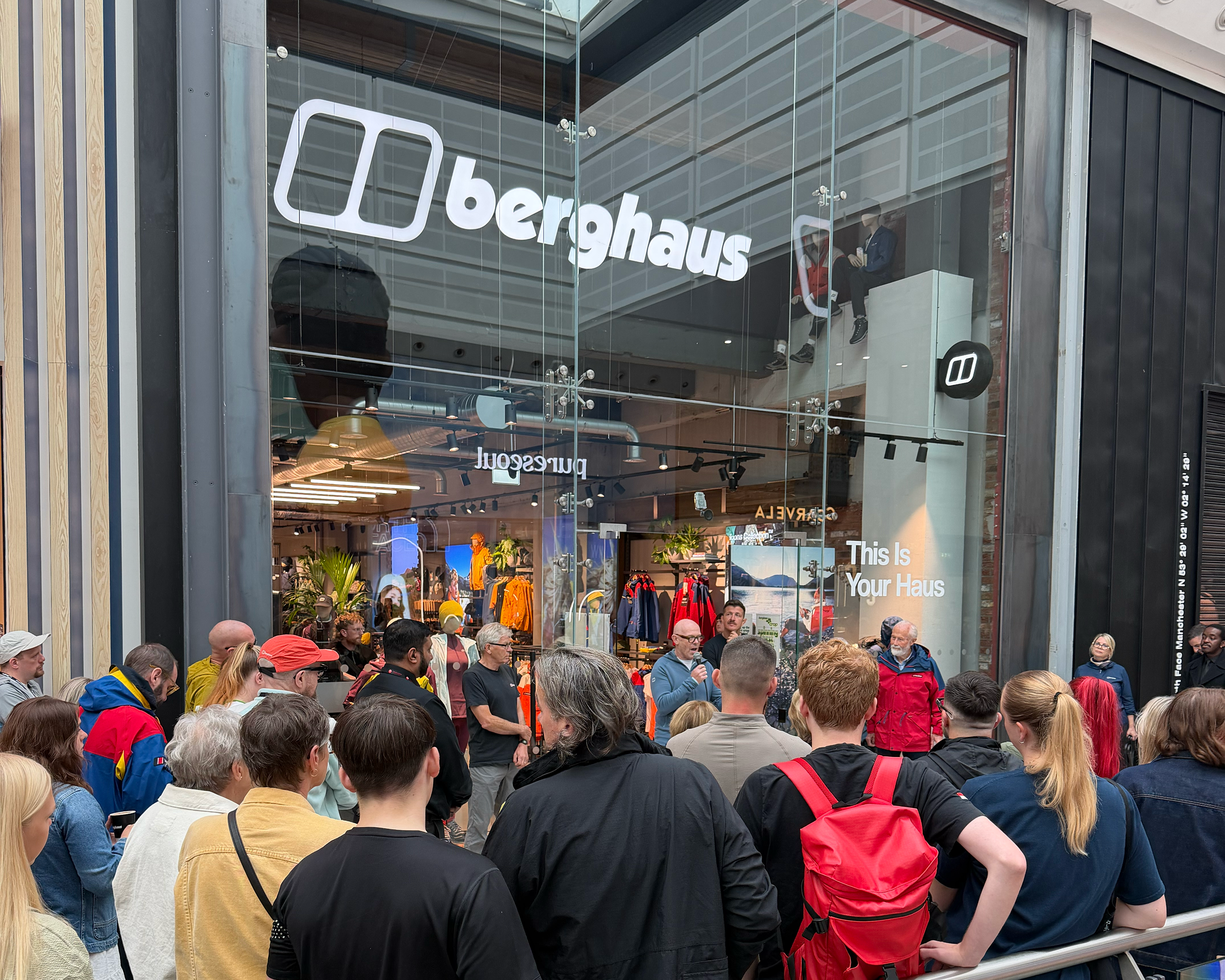
I was one of the lucky few to be invited to the grand opening of Berghaus’s first-ever standalone store today. Based in Manchester’s Arndale, it marks a new chapter for the British outdoor brand that’s been around for more than 60 years.
The store features its latest collections and technical gear, along with a cute section for dog accessories. But it wants to be more than just a retail space. It hopes to become a “gateway to the outdoors”, no doubt taking cues from Outsiders – a hugely popular outdoor shop over in the Northern Quarter.
I’ll admit. Berghaus had a bit of a reputation. Low-quality stuff, worn by the cool kids in the ‘90s, sold everywhere on the cheap. It felt like it had lost its way and wasn’t exactly the sort of thing you’d want to invest in to tackle the harsh British climate.
More importantly, I didn’t feel any emotional connection. Like most, I assumed it was German. Why would I care about Berghaus when there are so many other, worthier contenders?
There’s no doubt outdoor clothing is booming. It’s been popular for over a decade, thanks to “gorpcore”, Japanese influences, and the huge rise of outdoor activities since the pandemic. It’s why so many brands are thriving. Columbia, Patagonia, and wander, Arc'teryx, Goldwin, Keen, Gramicci. There’s almost a cult following behind this stuff. I should know. I’m one of its faithful followers. And love investing in clothing for both the fells and the streets.
What these brands have in common is a story. I might be a Millennial/Gen X kid. But like Gen Z, I want to know I’m buying something with an actual pulse.
So it was charming to discover that climbers Peter Lockey and Gordon Davison founded Berghaus in Newcastle upon Tyne in 1966, selling other people's kit from a shop called the LD Mountain Centre, until they could make it better themselves.
It gained a reputation. It was known for quality. Somewhere in the mid-90s, Manchester's cool kids started wearing Berghaus as streetwear. Oasis was seen on stage in it. Since then, mid-market ubiquity has probably hurt the brand. There’s nothing wrong with placing yourself deliberately below the premium technical labels and above supermarket brands. Or selling yourself everywhere. This approach is fine if you're a wholesale business, but it risks weakening a brand’s reputation.
Honestly? I just didn’t feel a connection. And that's a damn shame because Berghaus does have history. It has founders who cared passionately enough about something to bring it to life. Yet Berghaus had lost its way.
Meet Bob Neville. He’s Pentland's global head of retail and the man behind Berghaus's fresh chapter. He's got quite an interesting backstory of his own. He has a degree in product design, has won a few design competitions, and even had a toy sold at Toys R Us for a while. That led him into retail, where he worked for the likes of Adidas, New Balance, Under Armour, and Clarks. He's probably the reason why you're wearing brands you'd never have dreamed of entertaining a few years ago.
I met Bob today at the Manchester launch and went straight in with the hard question: how did Berghaus lose its way? “Brands go in cycles. People come and go. And there's always a reset at some point," he says. "This Manchester store marks a reset for Berghaus and a new chapter in its story."
Was it a matter of wholesale brand dilution? He wasn't drawn on specifics. But he did talk about the power of storytelling with heritage brands. "There's a great story to tell here. Berghaus is a brand that has real heart and roots in northern England. So it felt right to launch here, close to so many beautiful spots."
He was also quick to make one thing clear: this shop doesn't replace wholesale; it builds it. Which makes sense. It becomes a place where people can meet the brand properly, hear where it came from and why it exists... and then suddenly, that jacket or pair of socks on someone else's shelf has more meaning. Bottom line? Own the story, and everyone selling your gear benefits.
"It's about emotional connection," he says. "If people understand where you come from, where you're based and why you even exist, that's a story worth telling. It gives them a reason to buy."
I have faith it will work. So many people are embracing the outdoors now; it’s a perfect opportunity for Berghaus to connect with new audiences and build on what it's achieved so far. Sure, that means inviting a bunch of journalists and influencers to the launch of its first-ever standalone store in Manchester. That’s how the marketing cycle goes. (Expect content on your Instagram feed soon.)
And yes, the fells are busier than ever. Some of it performative. Social media has done a fine job of promoting Britain’s beauty spots. You can’t climb a hill these days without spotting an influencer staring whimsically into the middle distance, waiting for the perfect light. Everyone wants that shot. It’s rather adorable that we all think we’re unique and the first to think of these things. But honestly, who cares? The important thing is people are outside and moving their bodies. And discovering the UK’s wild places for themselves.
Not so long ago, hiking felt like an underground pursuit… something for the initiated, with all the right gear and the OS map knowledge. If I’m honest, it didn’t feel at all accessible. Now it belongs to everyone. As anyone who knows me well will understand, this makes me very happy indeed.